fbpx

Tag: identification guide

Termite Swarm Season Tips

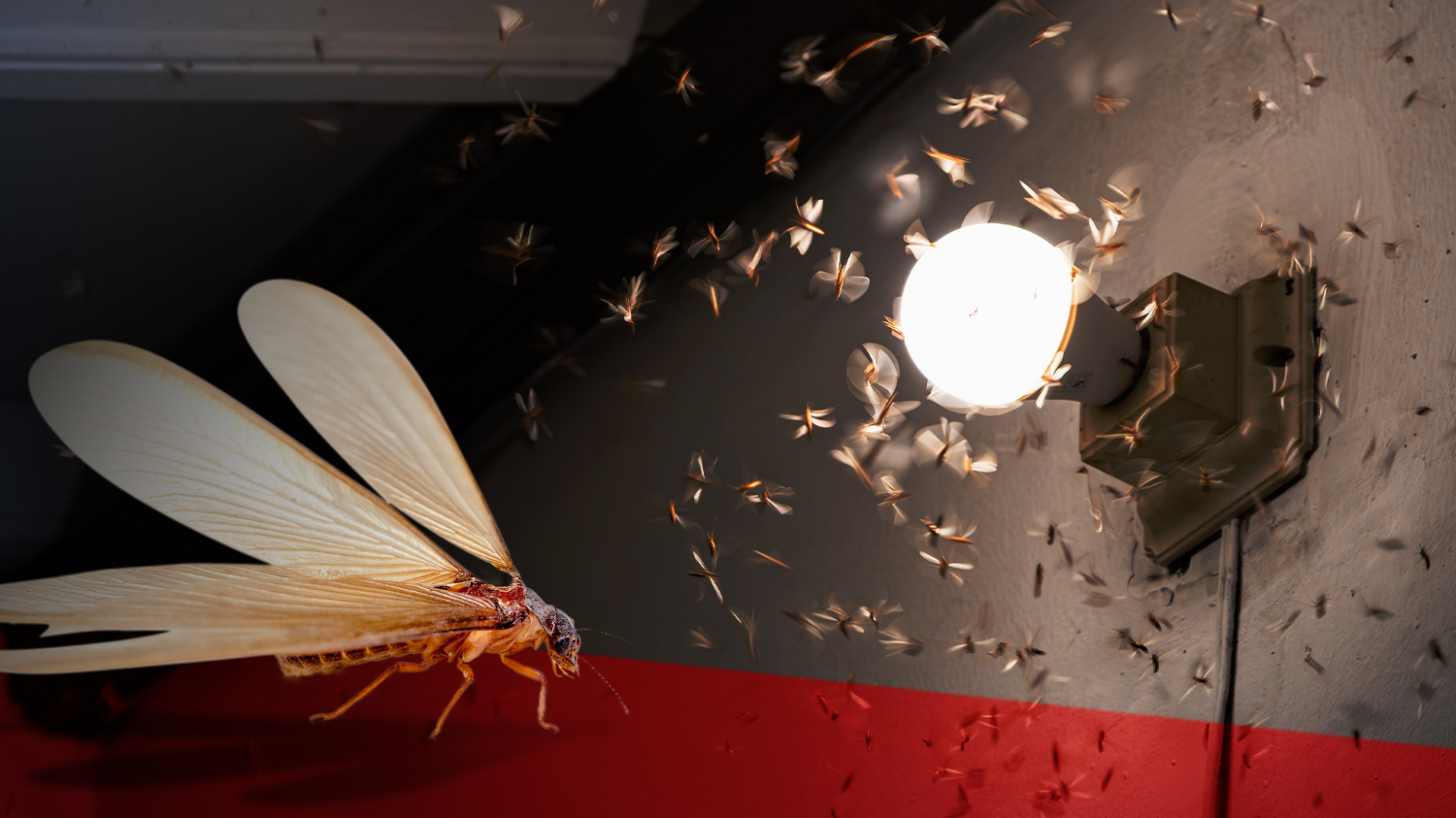
Formosan termite swarm flying near a light at night in Louisiana

What is a Termite Swarm?

Each year when the weather starts to warm up around Mother’s Day, Formosan termites start to swarm. What is a termite swarm, you may ask? Swarms are how termites reproduce and find new colonies. They occur across the state, usually after a rain, to search for their next place to call home.

Swarms themselves are not dangerous and do not damage your home, however, they do indicate the presence of a nearby colony. If you see a termite swarm near your home, call The Bug Man and learn how to protect your home or business. For more tips on termite identification and control, see EPA: Termites – How to Identify and Control Them.

Termite Swarm Facts

How do you identify a termite swarm? A swarm will be numerous flying insects at night near lights, leaving behind dead insects and wings that have dropped off. No pest control is needed to clean up the remains, just sweep or vacuum them up.

Here are the top 5 termite swarm facts:

  • Termite swarmers do not do damage to a home. They fly from their colony and pair with a mate to search for a suitable location to start a new colony.
  • Swarmers can come from over a football field away. If you see swarmers, it does not mean they’ve come from a colony in your home, but it does mean they’re nearby. Protect your home today.
  • Termites swarm at night and die within a few hours. If you miss the initial swarm, you can identify one if you see dead termites or wings in your office one morning.
  • Termite swarmers are attracted to light. Avoid swarmers by turning off exterior lights and lights inside your home by a window. Move any firewood away from the home. 
  • Termites will swarm around even the most well-protected property—it’s a natural, environmental event! There is no spray to prevent or kill termite swarmers.

Learn more about our Termite Control Services.

How to identify termites?

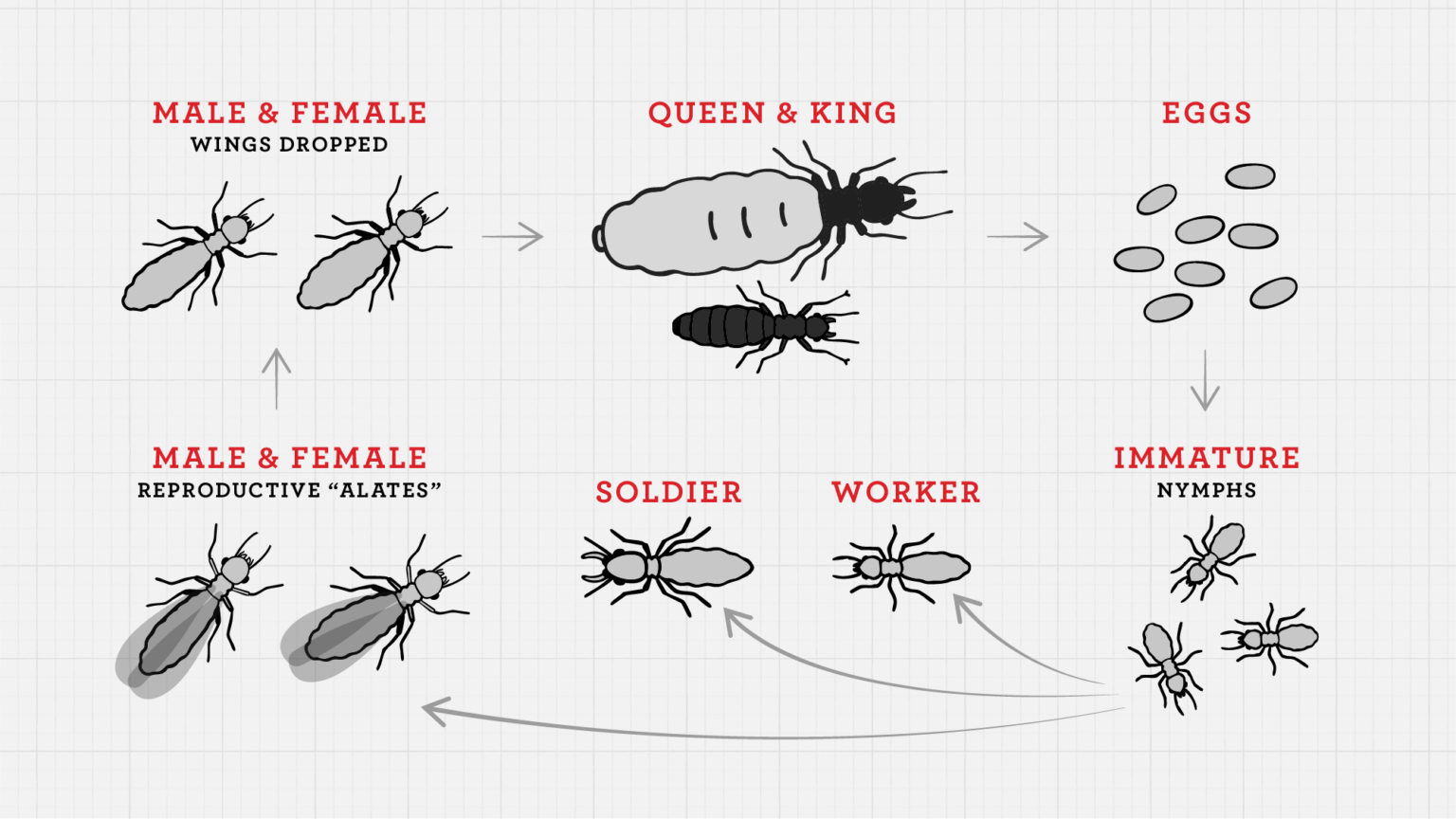
Soldiers protect a colony and a worker eats the wood but the alates are the “swarmers” whose only job is to mate and reproduce.

Termite swarm identification guide


Southern Louisiana Wasp Identification Guide

Wasp identification guide showing yellow jackets, paper wasps, mud daubers, and cicada killers in Southern Louisiana

Buzz Off! Know Your Local Wasps

Nothing ruins outdoor activities in Louisiana quite like encountering an aggressive wasp. Southern Louisiana is home to several wasp species, each with distinct characteristics and behaviors. This wasp identification guide will help you recognize the five most common wasps in our region: yellow jackets, paper wasps, mud daubers, cicada killers, and bald-faced hornets. For more on distinguishing wasp species, see the USDA Agricultural Research Service. 

If you’re seeing wasps or bees around your home or business, it’s time to take action. Learn more about our Residential Pest Control and Commercial Pest Control services to keep your property wasp-free.

Yellow Jackets – Wasp Identification and Behavior

Where Are They Found And What Are They Looking For?

Yellow jackets (Vespula species) are highly aggressive social wasps that build underground nests, often in abandoned rodent burrows, or occasionally in wall voids and attics. In Southern Louisiana, they’re particularly active from late spring through fall. Yellow jackets are attracted to sweet foods, proteins, and garbage, making them unwelcome guests at outdoor gatherings.

Identifying Features

Yellow jackets measure about ½ inch long with distinctive bright yellow and black striped patterns. Their bodies are smooth and shiny, with clearly defined waists. Unlike bees, yellow jackets have very little hair and a more streamlined appearance. They typically fly with their legs held close to their bodies. Their nests are papery with a distinctive envelope covering and can house thousands of individuals. Accurate wasp identification is important to distinguish yellow jackets from less aggressive species like paper wasps.

Paper Wasp Identification Guide

Where are they found and what are they looking for?

Paper wasps (Polistes species) build open-comb paper nests that hang from a single stalk, typically under eaves, behind shutters, or in other sheltered locations. In Southern Louisiana’s warm climate, paper wasp colonies can persist longer than in northern regions. They feed primarily on caterpillars and other garden pests, making them beneficial for gardeners.

Identifying Features

Paper wasps are slender, measuring ¾ to 1-inch long, with long legs that dangle when flying. They display various colors, including reddish-brown, black, and yellow patterns. Their bodies are more elongated than yellow jackets with a very thin waist. Paper wasps are less aggressive than yellow jackets but will defend their nests if threatened.

Mud Daubers – Identification and Nesting Habits

Where Are They Found And What Are They Looking For?

Mud daubers (Sceliphron species) are solitary wasps that construct distinctive mud tube nests on walls, under eaves, in attics, and other protected areas. Common throughout Southern Louisiana, mud daubers hunt spiders, which they paralyze and store in their mud nests as food for their larvae.

Identifying Features

Mud daubers are slender wasps, typically ¾ to 1 inch long, with extremely thin, thread-like waists. The most common species in Louisiana is the black and yellow mud dauber, which has a black body with bright yellow markings on the legs and thorax. Blue mud daubers display a metallic blue-black color. Their mud nests are tube-like structures, often clustered together in protected locations.

Cicada Killers

Where Are They Found And What Are They Looking For?

Cicada killers (Sphecius speciosus) are large, solitary wasps that dig burrows in well-drained, light-textured soils in sunny locations. In Southern Louisiana, they’re most active during summer when cicadas emerge. Despite their intimidating size, they’re focused on hunting cicadas to provision their underground nests.

Identifying Features

Cicada killers are Louisiana’s largest wasps, measuring 1.5 to 2 inches in length. They have rusty red to black bodies with bold yellow markings on the abdomen. Their wings have a rusty tinge, and their massive size makes them easy to identify. Despite their fearsome appearance, male cicada killers cannot sting, and females rarely sting humans unless handled.

Do you have a different flying bug in your backyard?

Check out our Bees and other identification blogs.

If you suspect any of these wasps have established nests on your property, the safest and most effective solution is to call The Bug Man. Wasp stings can cause painful reactions and potentially dangerous allergic responses in sensitive individuals. Contact The Bug Man to handle wasp identification. We will relocate their nests safely–we’ll handle the risky work so you don’t have to.


Southern Louisiana Bee Identification Guide

Bee identification in Louisiana showing honey bees, carpenter bees, and leaf-cutter bees

The Buzz About Bees! Know Your Local Pollinators

Southern Louisiana’s warm climate and abundant flowering plants make it an ideal habitat for various bee species. This bee identification guide focuses on three common bee types you’re likely to encounter in our region: honey bees, carpenter bees, and leaf-cutter bees. Each plays a unique role in our ecosystem and has distinct characteristics worth knowing.

If you’re seeing bees around your home or business and need assistance with management, learn more about our Residential Pest Control and Commercial Pest Control services to help keep your property safe while protecting these important pollinators.

Honey Bees – Bee Identification and Pollination

Where Are They Found And What Are They Looking For?

Honey bees (Apis mellifera) establish colonies in hollow trees, wall voids, and managed hives throughout Southern Louisiana. Thanks to our mild climate, honey bee colonies can remain active nearly year-round, with peak activity during spring and summer blooming seasons. These highly social insects collect nectar from flowering plants to produce honey, which serves as their food reserve during periods when flowers are scarce. Learn more about the vital role of honey bees and other pollinators from the USDA.

In Southern Louisiana, honey bees forage on native plants like Black-eyed Susans, coneflowers, and Goldenrod, as well as agricultural crops including citrus, strawberries, and cucurbits. A single colony may collect nectar from flowers within a 3-mile radius of their hive, making them highly effective pollinators across large areas.

Identifying Features

For effective bee identification, look for their moderately hairy, golden-brown and black striped abdomens and the pollen baskets (corbicula) on their hind legs, which often appear as bright yellow or orange clumps when filled with pollen. Honey bees measure about ½-inch long and have a somewhat fuzzy thorax compared to wasps, making them relatively easy to distinguish.

Honey bee colonies are highly organized with three distinct castes:

  • The queen (larger, with an elongated abdomen)
  • Drones (male bees with larger eyes)
  • Workers (the most numerous, all female)

Their hives contain hexagonal wax combs arranged in parallel sheets and can house 20,000 to 80,000 individuals during peak season. When establishing new colonies, honey bees may form swarms—dense clusters of bees that temporarily gather on tree branches or structures while scout bees search for a new permanent nesting site.

Honey bees are generally docile when foraging but will defend their hive if threatened. Unlike wasps, honey bees can only sting once, as their barbed stinger remains in the skin, causing the bee’s death afterward.

Carpenter Bees – Bee Identification and Behavior

Where Are They Found And What Are They Looking For?

Carpenter bees (Xylocopa species) are large, solitary bees that drill perfectly round ½-inch diameter holes in untreated wood to create nesting galleries. In Southern Louisiana, they’re particularly active from early spring through summer and are commonly found around wooden structures including eaves, deck railings, fence posts, and outdoor furniture. Unlike termites, carpenter bees don’t consume wood—they excavate it solely for nesting purposes. Though this does not make them less dangerous for structures.

The female carpenter bee creates a tunnel that turns 90 degrees after the entrance and extends 4-6 inches along the wood grain. Within this tunnel, she constructs a series of brood cells, each provisioned with a ball of pollen and nectar before laying a single egg and sealing the cell. New adult bees emerge in late summer, and some may overwinter in the tunnels to begin the cycle again the following spring.

Carpenter bees are important pollinators in Southern Louisiana’s ecosystem, visiting a wide variety of flowering plants including salvia, lantana, passionflower, and many native wildflowers. They practice a unique “buzz pollination” technique where they vibrate their flight muscles to shake pollen loose from flowers, making them especially effective pollinators for certain plants.

Identifying Features

Carpenter bees are robust insects measuring ¾ to 1 inch in length, making them among the largest bees in Louisiana. The eastern carpenter bee (Xylocopa virginica), our most common species, has a shiny, hairless black abdomen that distinguishes it from similarly-sized bumble bees. Their thorax is covered with yellow, orange, or black hairs, and they have impressive mandibles adapted for drilling into wood.

Sexual dimorphism is pronounced in carpenter bees:

  • Males have a distinctive yellow or white facial marking and cannot sting, but they display territorial behavior by hovering near nest entrances.
  • Females have entirely black faces and possess stingers, though they rarely sting unless directly handled or threatened.

The entrance holes to carpenter bee nests are remarkably perfect circles about ½ inch in diameter, often with visible yellow pollen stains below and sawdust-like wood shavings during active excavation. Multiple generations may reuse and extend the same galleries over years, potentially causing structural damage if infestations are heavy.

Leaf-cutter Bees – Bee Identification and Nesting Habits

Where Are They Found And What Are They Looking For?

Leaf-cutter bees (Megachile species) are solitary bees that nest in existing cavities such as hollow plant stems, abandoned beetle burrows in wood, masonry cracks, or even in the soil. Throughout Southern Louisiana, they’re active from late spring through fall, with peak activity during the warmest months. Unlike carpenter bees, leaf-cutters don’t excavate their own nesting cavities but instead find pre-existing ones.

What makes these bees fascinating is their unique nesting behavior—they cut nearly perfect circular or oval pieces from leaves and flower petals to construct their nests. The female leaf-cutter bee uses these plant materials to create a series of thimble-shaped cells inside her chosen cavity. Each cell contains a pollen and nectar provision upon which she lays a single egg before sealing it with more leaf pieces. A complete nest may contain 4-12 cells arranged in a linear series.

In Southern Louisiana, leaf-cutter bees commonly harvest material from roses, redbud, ash, and bougainvillea leaves, though they rarely cause significant damage to plants. As efficient pollinators, they visit a wide variety of flowering plants including native wildflowers, vegetables, and fruit trees, carrying pollen in a unique way that makes them especially valuable in our ecosystem.

Identifying Features

Leaf-cutter bees are medium-sized insects, typically measuring ⅜ to ⅝ inch long, with robust bodies that appear flattened compared to honey bees. Their most distinctive feature is how they carry pollen—unlike honey bees that transport pollen on their hind legs, leaf-cutter bees collect it on specialized hairs (scopa) on the underside of their abdomen. This gives their bellies a bright yellow or white appearance when laden with pollen and results in a characteristic flight pattern where the abdomen is often held higher than the thorax.

Most leaf-cutter species in Southern Louisiana have black or dark gray bodies with pale abdominal stripes created by bands of light-colored hairs. The females have modified mandibles specially adapted for cutting leaves with remarkable precision. While capable of stinging, leaf-cutter bees are generally non-aggressive and only sting if handled or trapped.

The most visible sign of leaf-cutter bee activity is their distinctive cutting pattern—nearly perfect circles or ovals about ½ to ¾ inch in diameter removed from leaf edges or petals. Multiple cuts may appear on the same leaf, though the bees typically distribute their harvesting across different plants to minimize impact.

Bees vs Wasps

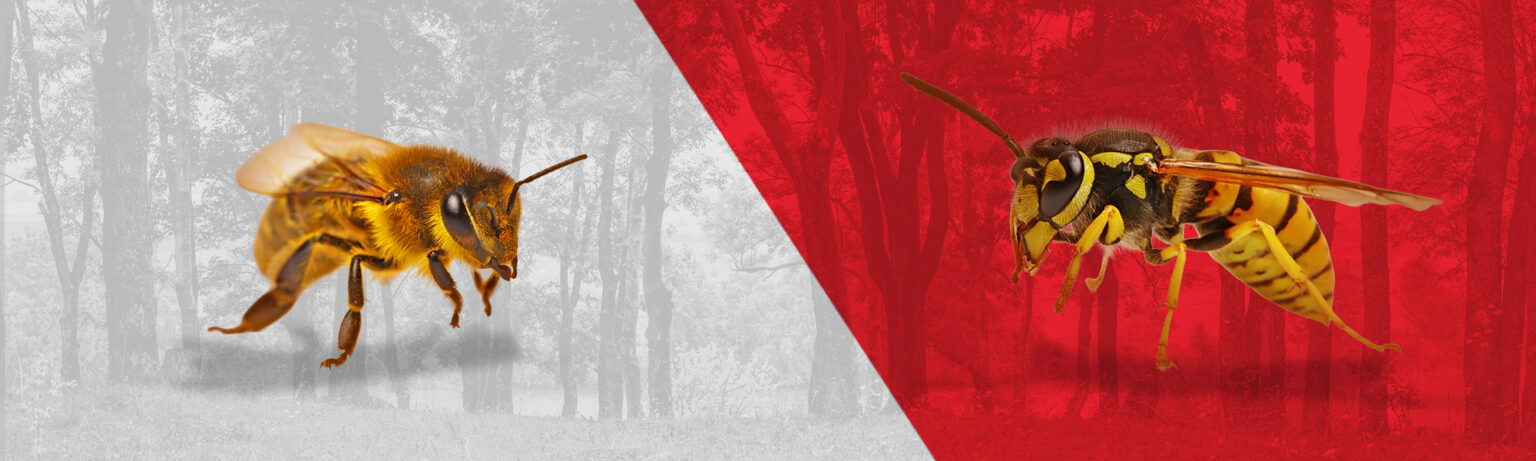
Comparison of a bee and a wasp showing differences in size, color, and body shape for identification.

Unlike aggressive wasps, these bee species are relatively docile and will only sting when threatened or handled. Learn to identify bees from wasps in our blog. Bees play a crucial role in our ecosystem as pollinators, and many species are experiencing population declines. Whenever possible, it’s best to leave bees undisturbed.

If you have concerns about bee activity near your home, especially if you suspect a honey bee colony has established itself inside a structure, contact The Bug Man. We can help with humane removal options and provide guidance on creating bee-friendly spaces that keep them at a safe distance from your living areas.


Ant Identification Guide: Know Your Tiny Neighbors

Ant identification guide showing common household ant species

How to ruin a backyard barbecue? Stepping into an aggressive anthill. These industrious insects can quickly establish colonies in and around your living spaces. While some ants are merely a nuisance, others can cause structural damage or deliver painful bites. Ant identification is the first step in protecting your home from these pests. This guide will help you identify common ant species so you can take appropriate action.

If you’re seeing ant colonies around your home or business, it’s time to take action. Accurate ant identification is the first step in determining the right treatment. Learn more about our Residential Pest Control and Commercial Pest Control services to keep your property pest-free. 


Common Household Ants – Tips for Ant Identification

Red Imported Fire Ants – Identification and Safety Tips

Identifying Features

Red imported fire ants are reddish-brown with darker abdomens and measure 2–6 mm in length, varying by caste. They have two nodes between the thorax and abdomen, and their antennae have 10 segments with a two-segmented club. Their most notorious feature isn’t visible—it’s their painful sting that produces a burning sensation followed by a pustule.

Where are they found and what are they looking for?

Fire ants prefer sunny, open areas like your lawn and build distinctive mound nests that can be up to 18 inches tall. They’re aggressive defenders of their nests and will swarm anything that disturbs their mound. They feed on a variety of foods, including other insects, seeds, and sweet substances like honeydew from aphids. For first aid and safety tips for fire ant stings, see NIOSH: Protecting Yourself from Stinging Insects. 

Carpenter Ants – Ant Identification for Homeowners

Identifying Features

Carpenter ants are among the largest ants in North America, measuring 6–12 mm in length. They are typically black, red, or a combination of both colors. Their most distinctive feature is their heart-shaped head when viewed from the front and their thorax, which has an evenly rounded upper profile without spines. Worker ants have a single node between the thorax and abdomen.

Where are they found and what are they looking for?

Carpenter ants are found worldwide, primarily in wooded areas, trees, and wooden structures. Proper ant identification can help you distinguish them from other wood-infesting insects. Unlike termites, they don’t eat wood but excavate it to build their nests. They’re particularly attracted to moist or damaged wood in homes, such as around leaky pipes, windows, doors, and roof eaves. When disturbed, they may emit a formic acid smell.

Crazy Ants – Recognizing Crazy Ants in Your Home

Tawny crazy ants in Louisiana for ant identification

Identifying Features

Tawny crazy ants are invasive ants from South America. They have become a significant nuisance in the last few years here in Louisiana. They get their name from their erratic, unpredictable movement patterns. They are small (3 mm) with long legs and antennae. Their bodies are usually reddish-brown. These are easy to identify, often gathering in large groups to cover an area like a blanket! They’re difficult to control due to their large numbers, lack of centralized nests, multiple queens, and ability to detoxify common insecticides, but we have a proven remedy.

Where are they found and what are they looking for?

Crazy ants form colonies in both dry and moist environments, including soil, tree cavities, trash, under stones, and inside homes. They also do not build centralized nests, instead forming colonies under almost any object that retains moisture such as tree stumps, potted plants, rocks, soil, or even concrete. They’re omnivorous and are particularly attracted to sweet substances within plants or over-ripe fruit.

Odorous House Ants – Identification and Prevention

Identifying Features

Odorous house ants are small (2.5–3.5 mm) and dark brown to black. Their most distinctive feature is the strong, rotten coconut-like smell they emit when crushed, giving them their name. They have a single node on their petiole that’s hidden by their abdomen when viewed from above.

Where are they found and what are they looking for?

These ants typically nest in wall voids, under floors, behind baseboards, and near heaters or water pipes. Outdoors, they nest in soil under stones, logs, and mulch. They’re highly attracted to sweet foods and will also consume proteins. Their colonies can contain thousands of workers with multiple queens.

Pavement Ants – Ant Identification Made Easy

Identifying Features

Pavement ants are small, measuring only 2.5–4 mm in length. They are dark brown to black in color with lighter-colored legs and antennae. Their most distinctive features are the parallel lines on their head and thorax and two small spines on the back of their thorax. They move slowly and will form trails to their food sources. 

Where are they found and what are they looking for?

As their name suggests, pavement ants typically nest under sidewalks, driveways, and building foundations. Inside homes, they may nest in walls, under floors, or in insulation. Pavement ants are omnivorous and will eat almost anything, including greasy foods, meats, sweets, fruits, and even other insects.

Pharaoh Ants – Ant Identification Indoors
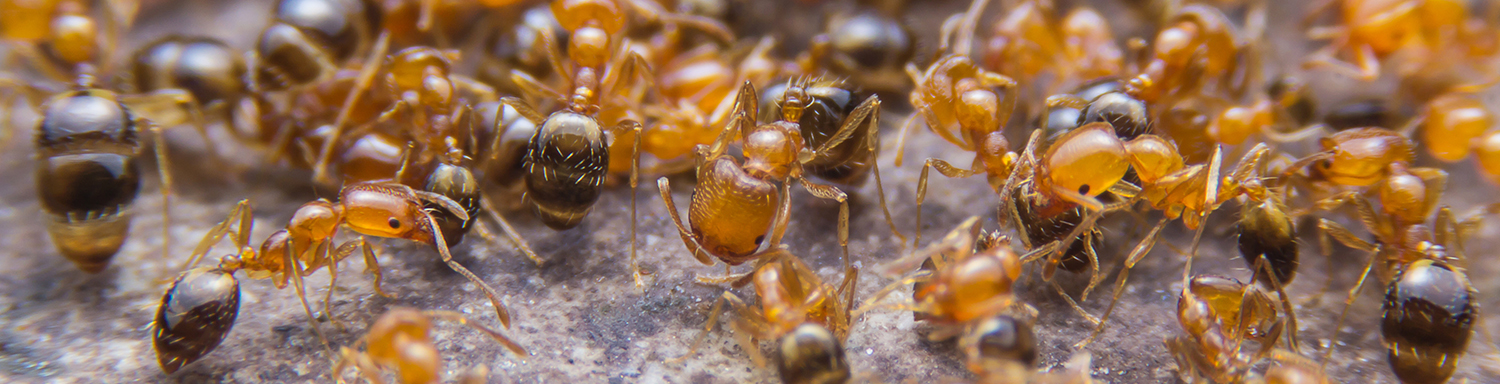
Pharaoh ants in wall voids for ant identification and control

Identifying Features

Pharaoh ants are tiny (1.5–2 mm) and light yellow to reddish-brown with a darker abdomen. They have 12-segmented antennae with a three-segmented club and two nodes between their thorax and abdomen. Their small size and light coloration make them distinctive.

Where are they found and what are they looking for?

These ants thrive in warm, humid environments and are commonly found in hospitals, apartments, hotels, and grocery stores. They nest in hard-to-reach areas like wall voids, behind baseboards, and under floors. Pharaoh ants are omnivorous but show a preference for proteins and sweets. They’re notorious for their ability to spread diseases in healthcare settings.

Argentine Ants – Ant Identification for Invasive Species

Identifying Features

Argentine ants are small to medium-sized (2.5–3 mm) and light to dark brown. They have a single node between their thorax and abdomen and antennae with 12 segments. They don’t have stingers and don’t bite, but they do emit a musty odor when crushed.

Where are they found and what are they looking for?

Originally from South America, Argentine ants have become invasive in many regions. They form massive super colonies with multiple queens and can displace native ant species. They typically nest in moist soil near buildings or under debris. Argentine ants are attracted to sweet foods and protect honeydew-producing insects like aphids.

Little Black Ants – How to Tell Them Apart

Little black ants indoors for ant identification

Identifying Features

As their name suggests, little black ants are small (1.5–2 mm) and shiny black. They have two nodes between their thorax and abdomen and 12-segmented antennae with a club. Although common, they’re often confused with other small black ant species.

Where are they found and what are they looking for?

Little black ants nest outdoors in soil, under rocks, in rotting wood, and in masonry cracks. Indoors, they are often found in the kitchen and may nest in woodwork or wall voids. They feed on a variety of foods including sweets, oils, meats, fruits, and other insects. Their trails are often visible as they travel to and from food sources.

Acrobat Ants – Recognizing Acrobat Ants

Identifying Features 

Acrobat ants are named for their habit of raising their heart-shaped abdomen over their head when threatened, resembling an acrobatic pose. They’re 2.5–3 mm long and range from light brown to black. They have a pair of spines on their thorax and a two-segmented petiole.

Where are they found and what are they looking for? 

These ants commonly nest in dead or water-damaged wood, insulation, and wall voids. Outdoors, they inhabit tree cavities, stumps, and under stones. Acrobat ants feed on sweets and proteins, including honeydew from aphids and dead insects. They often follow electrical wires and plumbing lines to enter buildings.

Ghost Ants – Identification Tips for Ghost Ants

Identifying Features

Ghost ants are tiny (1.5 mm) with dark heads and thoraxes contrasting with their pale, nearly translucent abdomens and legs. This coloration makes them difficult to see on light surfaces, hence their ghostly name. When crushed, they emit a rotten coconut-like odor similar to odorous house ants.

Where are they found and what are they looking for?

Ghost ants prefer warm, humid environments and are common in tropical and subtropical regions. They nest both indoors and outdoors, often in plant pots, between books, behind baseboards, and inside wall voids. They’re strongly attracted to sweets but will also consume proteins. Their colonies can contain multiple queens, allowing for rapid expansion.

The Bug Man Will Handle the Infestation 

If you suspect any ant infestation in your home, the most effective approach is to work with a professional pest control company—they will handle the ant identification for you. Proper ant identification is crucial, as different ant species require different treatment strategies, and misidentification can lead to ineffective control measures. Contact The Bug Man to eliminate ant problems today—so you can get back to enjoying your home.

Don’t let ants take over your property. Our expert Residential Pest Control and Commercial Pest Control services are designed to identify the specific ant species you’re dealing with and implement targeted treatment plans. Schedule your appointment today!


 

Bed Bug Identification Guide

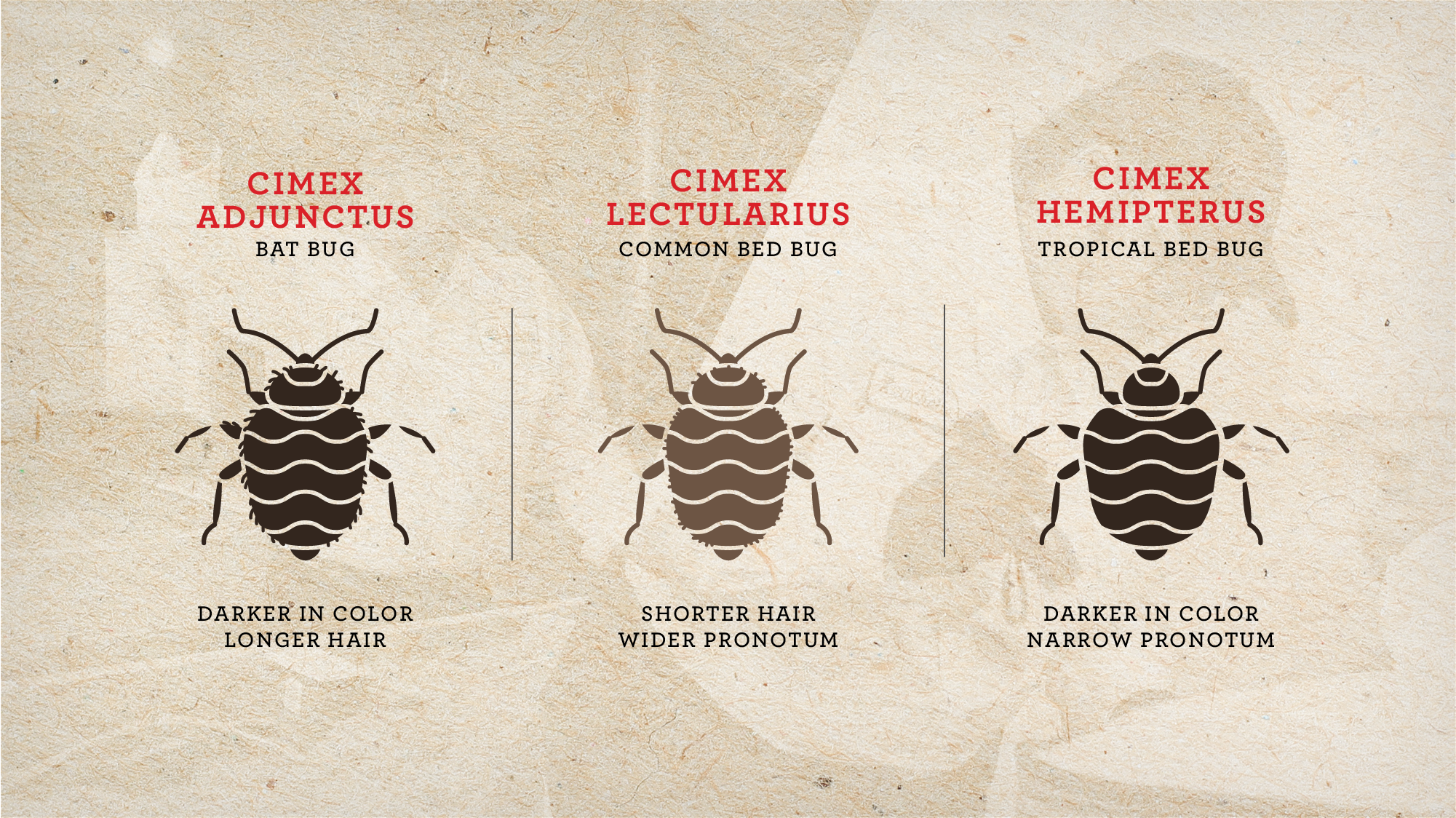
Bat bug vs bed bug identification features

Sleep Tight!

The last souvenir you want to bring home from your summer travels are bed bugs — and effective bed bug control is the only way to stop them from spreading. These blood-sucking pests are commonly spread by us humans when we’re on-the-move. The two primary bed bugs that affect humans are Cimex lectularius and Cimex hemipterus, also known as the common bed bug and the tropical bed bug, respectively.

If you’re seeing bed bugs in your home or business, it’s time to take action with professional bed bug control. Learn more about our Residential Pest Control and Commercial Pest Control services to keep your property pest-free. 

Did You Know?

The Bug Man offers bed bug training classes to housing facilities! This hour-long class will teach staff how to identify the insect and strategies for preventing the spread of bed bugs, including proper transport of bedding material throughout the facility. We also develop bed bug protocols for staff to follow in the event of an active issue. The course culminates in a short test showing completion of the training, which is a great tool for management to keep on file for any health inspections. Contact us to learn more.

Bed Bugs – What Are They and Why They’re a Problem

The bed bug is found all over the world, primarily in hotels, hospitals, public transportation, and even planes. The only difference between the common and tropical bed bugs is that tropical bed bugs prefer more tropical climates. However, tropical bed bugs can still be found in temperate areas where the common bed bug is found.

Bed bugs usually hide within 1 to 2 meters of their hosts during the day and come out to feed at night. According to the CDC, they can survive several months without a meal and travel significant distances to reach a host. They prefer hiding in seams of mattresses, crevices in box springs, behind headboards, under loose wallpaper or baseboards, and even behind pictures. 

Identifying Features of Bed Bugs

Bed bugs are oval-shaped, flat, and approximately 5 mm long. They resemble unfed ticks or small roaches and are easily visible to the naked eye. Adults have a chestnut, reddish-brown color, while juvenile bed bugs are more of a light yellow color. The bugs possess a pyramid-shaped head and slender antennae. After feeding, they may increase in length by 30 to 50%. Adult bed bugs can live for 6 to 12 months and can survive without feeding for up to a year.

Bat Bugs vs Bed Bug Control Challenges

Did you know that bats also have a blood-sucking pest? It’s called a bat bug. While usually unknown to humans, if there is a bat infestation in your home, it’s worth the time to see if these pests are there too!

Identifying Features

Bat bugs are typically lighter and tend to be more of a light brown-beige color than their common bed bug cousins. When put under a microscope, they display hairs longer than the width of their eyes, and they have shallower curve in the pronotum, giving them the appearance of a rounder head. 

Where Are They Found and What Are They Looking For?

Attics, crawlspace under your house, or other places you might find bats. They feed on bats, mice, birds, and rodents. When bats leave their space, the bat bugs go for their next target: you! They will migrate from their previous bat-infested homes into your living space–occupying the same spaces as common bed bug or tropical bed bug.

Professional Bed Bug Control Services – Let Us Do the Dirty Work!

If you suspect any of the above bed bugs to be present in your home, the easiest, most effective way to get rid of them is with the help of a professional pest control company. Bed bugs cause painful bites, severe itching, significant sleep disruption, and reduced quality of life, so they should not be taken lightly. Contact us—we’ll do the dirty work so you don’t have to. 

Don’t let bed bugs take over your home. Our expert Residential Pest Control and Commercial Pest Control services are designed to eliminate infestations and keep them from coming back. Schedule your appointment today!

Asian Lady Beetles: How to Manage an Invasion

Asian Lady Beetles: How to Manage an Invasion

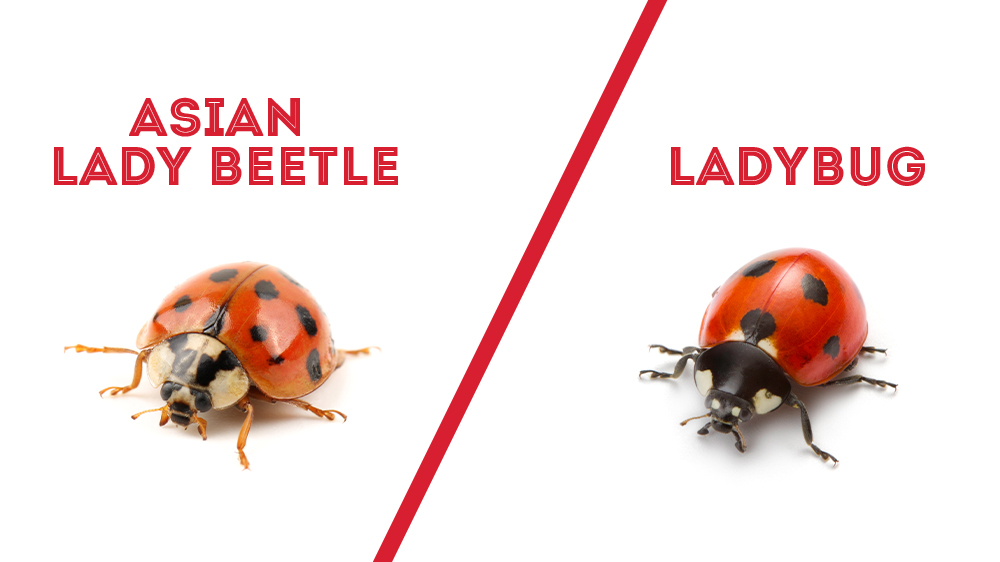
When it comes to pests, Asian lady beetles are one of the most unwelcome guests in many homes. These small yet mighty creatures have made their way from Southeast Asia and are now an invasive species across North America. While they can bring some natural benefits, they also often invade homes during autumn months, causing quite a nuisance.

So what can you do if Asian lady beetles show up unwanted at your doorstep? The first step is to identify them properly. These insects vary in color from red to orange and yellow and usually measure about 3/8 inch long. They also carry distinctive markings, including black spots or lines on their back, which make them relatively easy to spot!

Once you’ve identified the source of the invasion, there are several steps you can take to manage them effectively. Most importantly, make sure that any existing cracks or holes around windows and doors are sealed properly or else the lady beetles will find their way back in no time! It’s also important to keep your house clean as this reduces their chances of surviving indoors. Finally, use insecticides and a vacuum to treat the infestation. Make sure never to squish these beetles as they will stain a surface and will omit an odor. 

When it comes to outdoor control measures, removing potential food sources is key. Lady beetles enjoy consuming aphids that attack plants, so regular pruning and tilling can help prevent infestations before they start! Additionally, keeping a close eye on high-traffic areas such as porches, decks and gardens will allow you to spot any incoming lady beetles colonies early on and intervene appropriately.

In conclusion, Asian lady beetles aren’t always bad news; they provide some natural benefits by eating destructive crop pests and other bugs alike. That being said, if they become too much of an issue, then proper management strategies need to be put in place in order for you and the environment alike to benefit! That’s why The Bug Man is here.

Roach Roster: The Difference Between American, German & Smoky Brown Roaches

Roach Roster: The Difference Between American, German & Smoky Brown Roaches

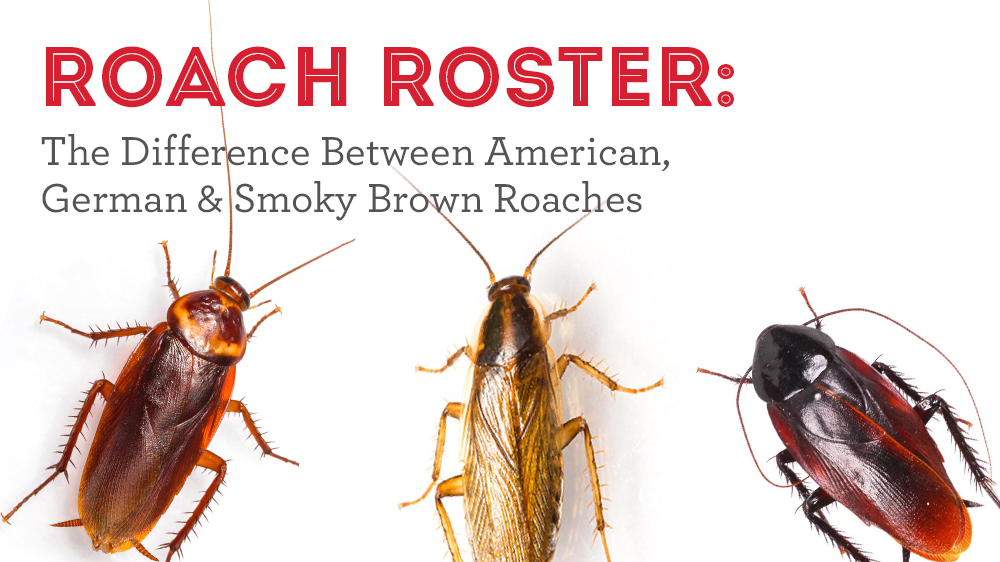
We’ve all been there – you walk into your kitchen to grab a late-night snack and right as you reach for the oreos, you see a gigantic roach dart across your floor. How are you going to track it, kill it and stop others from following in its footsteps? A great starting place is identifying which type of cockroach it is. Did you know that there are actually thousands of species of them? We’re going to break down the top three that we typically come across in Louisiana to help you decipher your unwelcomed visitors.

If you’re seeing roaches in your home or business, it’s time to take action. Learn more about our Residential Pest Control and Commercial Pest Control services to keep your property pest-free.

American Cockoach

Sometimes known as the palmetto or water bug, American cockroaches are the biggest commonly-found species – often living outdoors, but making their way in for sustenance.

Identifying features:

  • Reddish brown in color with a yellow stripe behind the head
  • About 32-54 mm in length
  • Will fly sometimes
  • Will gather together in open spaces

Where are they found and what are they looking for?

  • American cockroaches are often found outside in warm, moist areas like flowerbeds and near trees, but they will go inside in search of food or water or in response to a climate change
  • They often enter through cracks under doors, in crawl spaces and garages
  • Inside, you can find them in places where crumbs, food particles and fermenting materials collect, like under appliances and in cabinets and pantries

German Cockroach

One of the smallest types of cockroaches, German roaches are one of the most well-known indoor roaches with the ability to easily travel via plumbing and through bags, boxes and furniture brought into the home.

Identifying features:

  • Light brown in color with two black stripes behind the head
  • About 13-16 mm in length
  • Fly infrequently, although they do have wings

Where are they found and what are they looking for?

  • German cockroaches prefer to live indoors and scavenge off of not only food droppings, but also things like garbage, books, hair and dog food
  • They gravitate toward dark, warm places, like around the wiring of electronics, under appliances and near trash cans

Smoky Brown Cockroach

A relative of the American cockroach, Smoky Brown cockroaches are large, nocturnal flying creatures that prefer the outdoors and non-dwelling places, but sometimes find their way indoors, often unnoticed.

Identifying features:

  • Dark mahogany or black in color with a shiny texture
  • About 33-38 mm in length
  • Often fly, with wings larger than their bodies

Where are they found and what are they looking for?

  • Smoky Brown cockroaches prefer warm, humid areas outside like in tree crevices, mulch, woodpiles, gutters and greenhouses
  • Because they get dehydrated easily, they are often found close to sources of water and feed on decaying plant and organic matter
  • They usually enter homes through sewers or fly in through doors and windows toward light to take refuge in areas like attics and crawl spaces

If you suspect any of the above cockroaches to be present on your property, the easiest, most effective way to get rid of them for good is with the help of a professional pest control company. Because cockroaches carry diseases and can be harmful to the health of your household, frequent sightings should not be taken lightly. Contact The Bug Man to clear cockroaches up today – we’ll do the dirty work so you don’t have to. 

Don’t let roaches take over your home or business. Our expert Residential Pest Control and Commercial Pest Control services are designed to eliminate infestations and keep them from coming back. Schedule your appointment today!