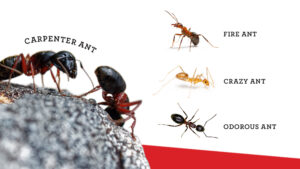

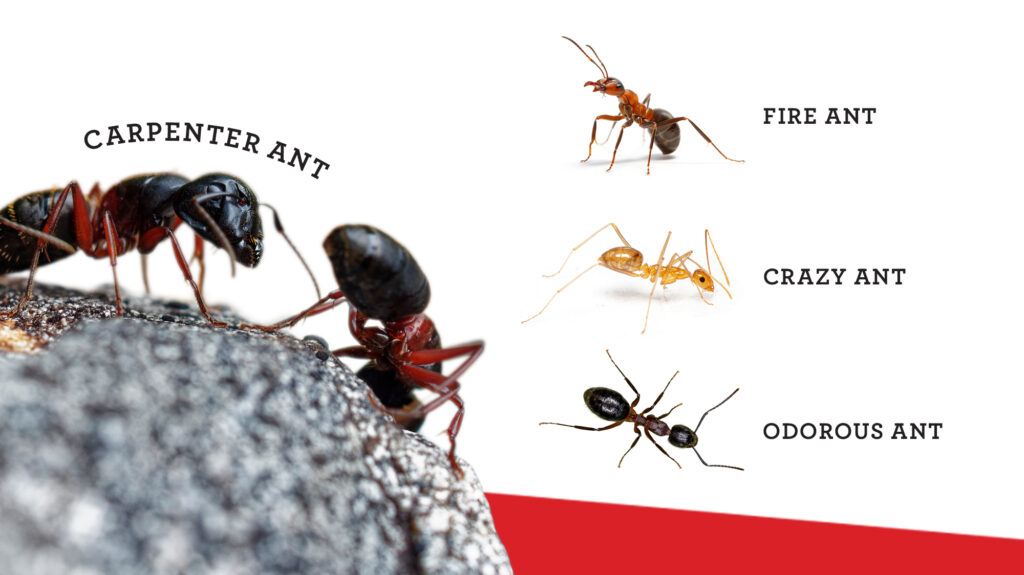
Ant control is essential for protecting your home, yard, and family—especially in Louisiana, where fire ants and crazy ants are common. Ants can be more than just a nuisance; fire ants can pose serious health risks to those with allergies, while invasive species like crazy ants can cause structural and electrical damage. The Bug Man offers professional ant control solutions designed to eliminate infestations and keep ants from coming back.
Fire Ants
These fire ants build mounds in almost any type of soil, but prefer open, sunny areas such as meadows, pastures, parks, playgrounds, lawns, sports fields and golf courses, as well as agricultural land and wilderness areas. Often mounds are located in rotting logs and around stumps and trees. Colonies also can occur in or under buildings. Fire ants will not create mounds when the weather is extremely hot (above 36◦C or 96◦F) or dry. At these times they go deep underground during the day and come out at night to forage. Fire ant stings are painful, characterized by a local burning sensation, which swells into a bump within hours. The bump may develop into a white pustule within 24–36 hours, which can become infected if scratched, but will spontaneously flatten within a few days if left alone.
For more detailed information on how imported fire ants behave and spread across the Southern United States, see the USDA APHIS Imported Fire Ants resource.
Crazy Ants
Crazy ants are another breed of ants that have been on the rise in Louisiana over the last few years. While they don’t sting or bite, crazy ants can cause structural damage because they often nest in homes, electrical boxes, etc. and they thrive and multiply in moist, wooded areas, cracks, crevices–anywhere they can find shelter. While people have tried to end the pests’ existence, they often find they are fighting a losing battle.
Fire ants are no joke and crazy ants are just a pain in the you know what! But, we can help. Contact The Bug Man, we have products such as granular treatment to the ant mound to kill them and then liquid treatment options around the structure of the home to help you keep them out of your yard.
Frequently Asked Ant Questions
What is the most effective ant control for fire ants in Louisiana?
While there’s no single “silver bullet” for ant control, the most effective fire ant treatment combines broadcast bait applications, liquid treatments, and spot treatment of individual mounds. This integrated approach helps eliminate colonies and prevent future infestations.
How long does professional ant control last?
Professional ant control typically lasts about three months, depending on weather conditions, environmental factors, and the type of ant being treated. Routine treatments help maintain long-term protection.
How does ant control differ for fire ants versus crazy ants?
Fire ant treatment:
Fire ant control focuses on eliminating the queen. This is done using bait or liquid treatments applied directly to the mound, or broadcast treatments for preventative control.
Crazy ant treatment:
Crazy ant control focuses on broadcast treatments because colonies contain multiple queens spread across a larger area. Products with systemic active ingredients work best because they create a domino effect, allowing ants to transfer the treatment throughout the colony.
Are ant control treatments safe for pets and children?
Ant control treatments are safe when applied by a licensed pest control professional. Professionals follow product labels, safety procedures, and application protocols designed to effectively target ants while protecting people and pets.
Why do ants keep coming back after treatment?
Ants may return after treatment for several reasons:
- The ant species may not have been identified correctly, resulting in the wrong treatment method. In some cases, this can cause colonies to split and spread.
- Treatment may have been incomplete, meaning the queen or colony was not fully eliminated.
- Only visible ants were treated, while the main colony remained hidden behind walls or outside the home.
Can I prevent ants from entering my home year-round?
Yes. Year-round ant prevention works best with routine exterior treatments. Additional prevention steps include sealing gaps and cracks around windows and walls, closing entry points, and maintaining landscaping by reducing vegetation near the home.
How often should ant control be performed?
Exterior ant control should be performed quarterly as part of routine inspection and preventative treatment. Interior treatment is typically done as needed, since exterior applications help keep ants from entering the home.